
Workshop
Workshop, from the machine arriving to the bill going out
Jobs quoted against what they actually cost, hours written down while they are being worked, parts charged instead of given away, and a warranty claim you can evidence when the machine comes back on a trailer.
Stalmio in 2 Minutes
What it does
The parts of Stalmio this department lives in, in the order you meet them. Every one has a short film right here, and a page of its own.
Workshop
Jobs estimated on the fly, hours never written down, parts fitted and never billed.
- Every job is a work order, with the estimate against the actual while the job is still open.
- Labour and parts line by line, at your own rates.
- Warranty work is priced as warranty work, so it never lands on the customer's bill by mistake.
Parts
Machines get the glory, but parts pay the bills, when you actually charge for them.
- Every part in stock control, with the bin it lives in and the level it reorders at.
- What it cost you and what it sells for, on the same screen.
- On a job or across the counter, nothing leaves the shelf unbilled.
Warranty
Five months after you sold it the machine is back on a trailer, and the customer says it is under warranty.
- One glance tells you whether it is in cover, what is covered and what is not.
- The terms you actually gave, in your own words, recorded when the deal was done.
- The repair is priced as warranty work, and every claim rolls up, so you know what standing behind your machines really costs.
Service reminders
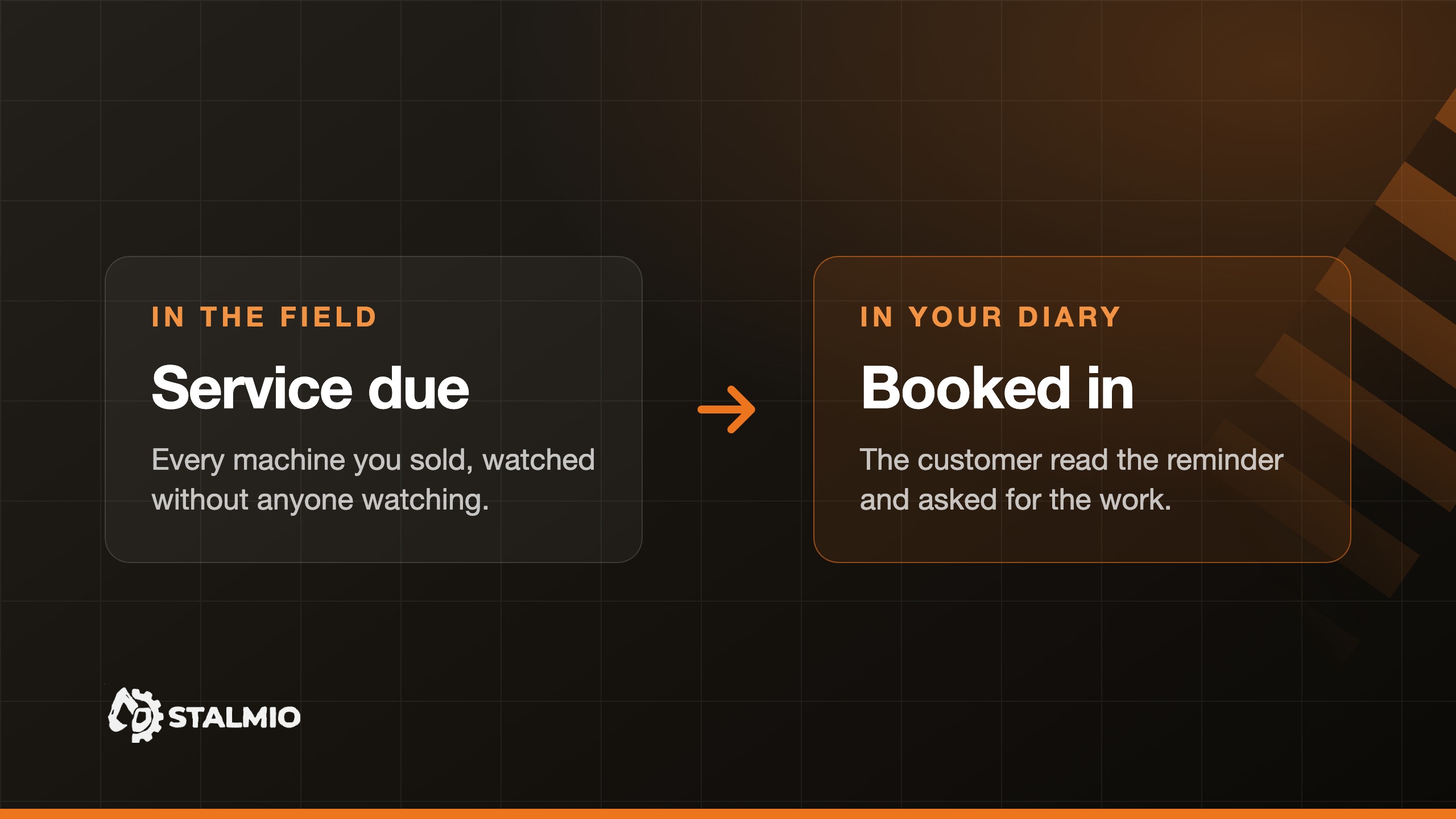
Every machine you sold needs its next service, and nobody is asking for the work
- The fleet view shows what is due, what is overdue and what is expiring.
- The reminder goes out under your name, in the customer's language.
- They book from the portal and the job lands in your workshop.
Billing
Knowing who owes you what should not need a spreadsheet and a good memory.
- Every bill is created from the thing it belongs to, so it is right because it was never retyped.
- Chasing is one click, the bill goes out attached to it, and it is logged so nobody chases twice.
- It all flows into your accounting software, which issues the formal invoice.
Accounting
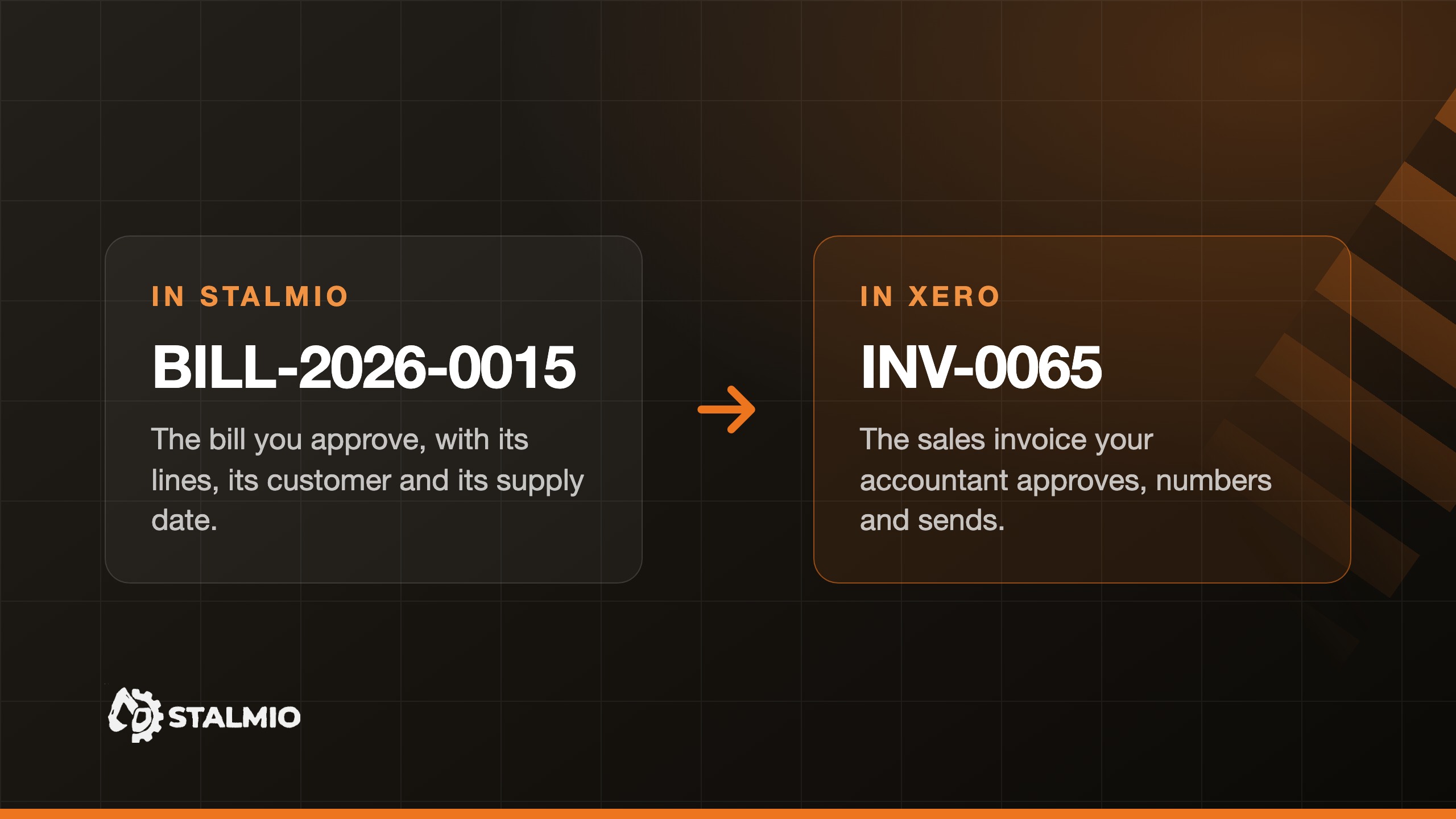
Every bill is typed twice, and the second typing is where the numbers stop agreeing.
- A bill you approve becomes a sales invoice in Xero or wFirma, on your own account codes and tax rates.
- Deposits post to a liability and are applied when the supply happens, so they never look like revenue.
- One invoice per bill, re-read rather than re-created, so a retry can never leave a duplicate behind.
On the phone
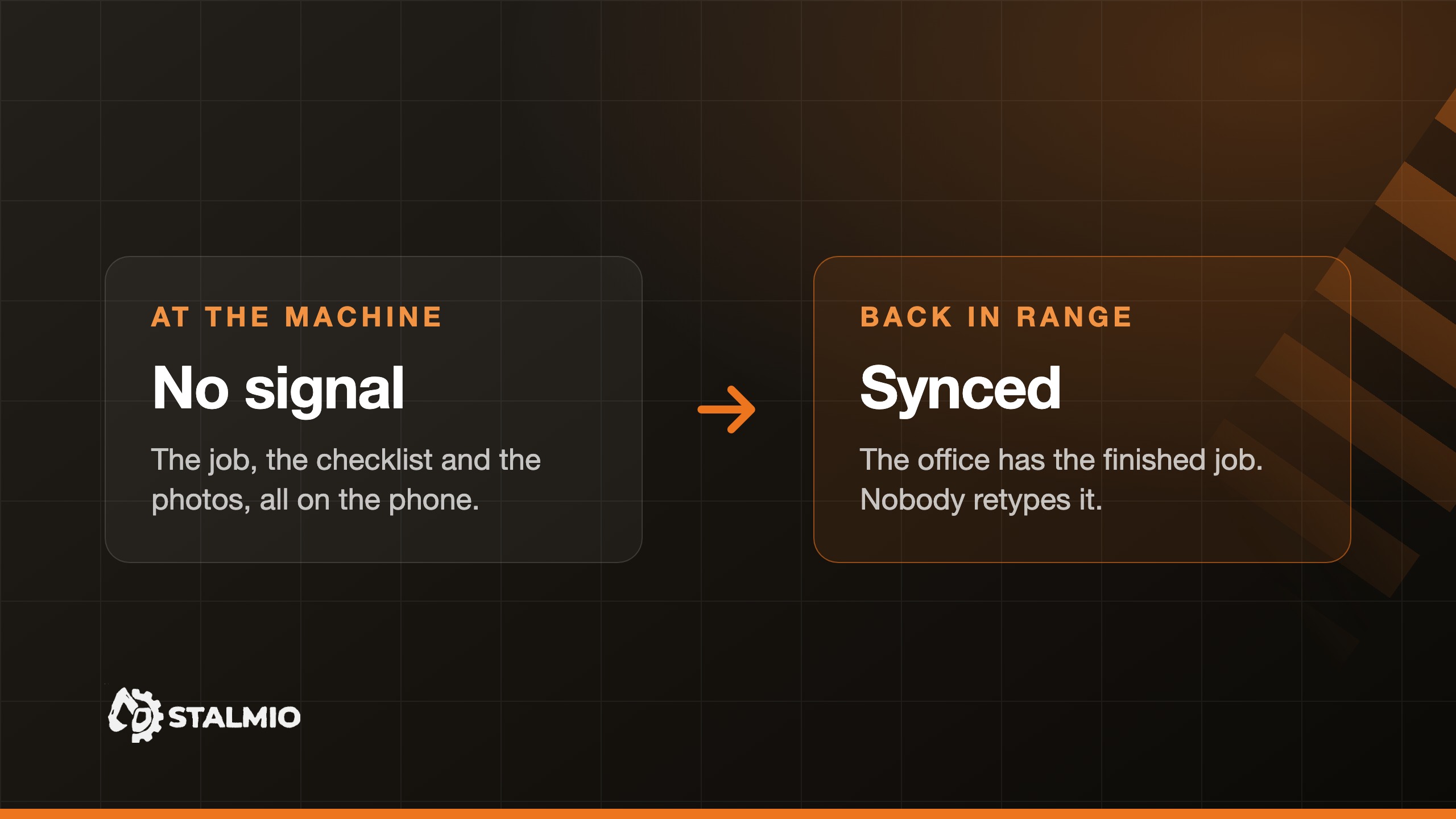
Paper job sheets, photos stuck on personal phones, and work written up three days late
- The dealer app installs onto any phone straight from the browser.
- Field gives engineers their jobs, checklists, photos and hours.
- It all works with no signal and syncs when the phone is back.
Who it is for
The kinds of dealer this was built for. Start with the one that sounds like your business.
Questions dealers ask
- Half our jobs start as a phone call, not a booking. Does that work?
- Yes. A job can start as a customer and a line and gain the detail later, because a workshop that has to fill in a form before it can pick up a spanner will not use the form. What matters is that the hours and the parts land on the job while the machine is still in the shop.
- How do parts stop leaving the shelf unbilled?
- A job draws parts from the same catalogue the counter sells from, so fitting one is what puts it on the job. There is no separate write-up at the end of the week for anybody to forget, which is the step where parts normally go missing.
- Can we tell whether a job made money?
- Every work order carries the estimate and the actual side by side, labour and parts at your own rates. A job quoted at 1,200 that has taken 1,850 of labour and parts reads as that while it is still open, not two months later when the figures are argued over.
See it on your own stock
A demo is a conversation, not a slideshow. Bring your machines, your hire fleet and the part of the week that annoys you most.